My Tire Blew Out on the Highway — What Are My Next Steps?
Published on: September 17, 2026
A tire blowout on the highway is one of the most frightening things that can happen to a driver. One second you’re cruising along, and the next a loud bang, your steering wheel pulls hard to one side, and your car starts to shake. In those first few seconds, it’s easy to panic.
But here’s the truth: how you react in the first 5 seconds determines whether you walk away safely or make things much worse.
This guide walks you through exactly what to do the moment a tire blows out, step by step, so you’re prepared before it ever happens to you.
What Does a Tire Blowout Feel Like?
Before we get into the steps, it helps to know what you’re dealing with. A tire blowout is not the same as a slow flat tire. A blowout is sudden and violent. You’ll typically experience:
- A loud bang or pop sound
- Your car pulling sharply to one side (the side with the blown tire)
- A flapping or dragging noise as the tire shreds
- The steering wheel vibrating or feeling heavy
- Your vehicle slowing down rapidly due to drag
Front tire blowouts are harder to control than rear ones because they directly affect your steering. Either way, the steps below apply.
Step 1: Do NOT Slam the Brakes
This is the most important rule and the one most drivers instinctively get wrong.
When a tire blows, your body wants to hit the brakes. Don’t do it. Slamming the brakes on a blown tire can cause you to spin out or lose control entirely, especially at highway speeds.
Instead:
- Keep a firm, steady grip on the steering wheel with both hands
- Ease off the gas gradually—don’t stomp it, don’t release it all at once
- Let the car decelerate naturally through engine drag
Stay calm. The car will feel unstable for a moment, but if you hold the wheel steady and resist braking, it will begin to stabilize.
Step 2: Steer Straight and Maintain Control
As the car pulls toward the blown tire, your job is to counteract that pull without overcorrecting.
- Apply gentle, steady counter-pressure on the wheel—not a hard jerk
- Keep your eyes focused far down the road, not on the shoulder right next to you
- Do not make any sudden lane changes
- If you’re in a middle or left lane, signal and move right gradually, one lane at a time
Your goal is to keep the vehicle moving in a controlled, straight line while you work your way toward the right shoulder.
Step 3: Gradually Slow Down and Pull Over
Once you have the car under control, it’s time to get off the highway safely.
- Gently apply the brakes only after your speed has dropped below 40 mph
- Steer toward the far right shoulder, as far off the travel lanes as possible
- If there’s an exit ramp nearby, take it—getting completely off the highway is always safer than stopping on the shoulder
- Come to a complete stop before doing anything else
Never stop in a travel lane. Even for a moment. Shoulder stops are dangerous enough—a lane stop is far worse.
Step 4: Turn On Your Hazard Lights Immediately
The moment you feel the blowout—even before you’ve fully pulled over—turn on your hazard lights (emergency flashers). This alerts drivers behind you that something is wrong and gives them time to move over or slow down.
Keep them on the entire time you’re stopped on the shoulder.
Step 5: Get as Far Away from Traffic as Possible
Once stopped, assess your surroundings before getting out of the car.
- If you’re on a highway with fast-moving traffic, stay inside your vehicle with your seatbelt on
- If you must get out, exit from the passenger side (away from traffic) only
- Move behind the guardrail if one is present—never stand between your car and moving traffic
- Do not attempt to change the tire yourself if you’re on a high-speed highway—it’s not worth the risk
Place road flares or emergency triangles at least 100 feet behind your vehicle if you have them. This is exactly why a basic emergency kit in your trunk can save your life.
Step 6: Call for Help
This is where professional help becomes essential. A tire blowout at highway speed often causes more than just a flat—it can damage your wheel rim, suspension, brake lines, or wheel well. Driving even a short distance on a blown tire can turn a $150 repair into a $1,500 one.
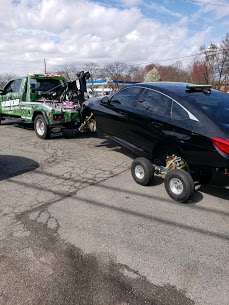
Call Rhino’s Wrecker Service at 703-655-6592. We’re available 24 hours a day and can reach most Alexandria-area highway locations within 30 minutes. Our team will safely tow your vehicle to our shop where our technicians can assess not just the tire, but any secondary damage the blowout may have caused.
Step 7: Document the Scene (If Safe to Do So)
While you wait for roadside assistance:
- Take photos of the blown tire and your vehicle’s position
- Note the mile marker or nearest exit—this helps the tow driver find you faster
- Call your insurance company if needed to report the incident
- Stay on the phone with someone if you’re feeling unsafe or anxious while waiting
What Causes Highway Tire Blowouts?
Understanding what causes blowouts helps you prevent them in the future. The most common causes include:
- Underinflation — The #1 cause. When a tire is underinflated, the sidewall flexes too much and builds up heat until it fails. Check your tire pressure monthly.
- Overloading your vehicle — Every tire has a load rating. Exceeding it puts enormous stress on the tire structure.
- Road hazards — Potholes, debris, and sharp objects can cause immediate failure, especially at high speeds.
- Old or worn tires — Tires older than 6 years (regardless of tread depth) are at significantly higher risk of blowout.
- Overinflation — Too much air pressure makes the tire rigid and more vulnerable to impact damage.
When Should You NOT Try to Change the Tire Yourself?
Changing a tire on a quiet neighborhood street is one thing. Doing it on an active highway shoulder is another. Do not attempt a self-change if:
- You’re stopped on a high-speed highway or interstate
- The shoulder is narrow or non-existent
- It’s dark, raining, or visibility is low
- You’re not confident in the process
- The wheel rim is visibly damaged
In any of these cases, call a professional. Your safety is worth more than saving a service call fee.
Summary: Tire Blowout Survival Checklist
- Don’t brake suddenly — ease off the gas first
- Hold the wheel steady — don’t overcorrect
- Signal and move right — one lane at a time
- Turn on hazard lights — immediately
- Pull as far right as possible — ideally past the white line
- Stay in the car if on a busy highway
- Call for a tow — don’t risk driving on a blown tire
- Note your location — mile marker, exit number, or street name
Stranded on a Virginia Highway? We’re 30 Minutes Away.
Rhino’s Wrecker Service has been helping drivers across Alexandria, Arlington, Fairfax, Springfield, and the surrounding Northern Virginia area for over a decade. When a blowout leaves you stranded, our dispatchers answer immediately day or night.
Call us now: 703-655-6592
Or submit a tow request online at rhinoswreckerservice.com
We’ll handle the rest.
FAQ
- Q1: What is the first thing I should do if my tire blows out on the highway?
Do not brake suddenly. Keep a firm grip on the steering wheel, ease off the gas gradually, and let the car slow down on its own before steering toward the right shoulder. Sudden braking is one of the most dangerous reactions to a blowout.
- Q2: Is it safe to drive on a blown tire to the next exit?
No. Driving even a short distance on a blown tire can destroy your wheel rim and cause suspension or brake damage. It also creates a dangerous handling situation at highway speeds. Pull over immediately and call for a tow.
- Q3: Should I change the tire myself on the highway shoulder?
Not if you’re on a high-speed road. Changing a tire on an active highway shoulder puts you dangerously close to fast-moving traffic. Call a roadside assistance or towing service instead—it’s the safer option.
- Q4: How do I know if my tire is blowing out vs. going flat slowly?
A blowout is sudden—you’ll hear a loud bang, feel strong pulling to one side, and the car will become hard to steer. A slow flat is gradual, with slight pulling and the car feeling sluggish. Both require you to pull over, but a blowout demands immediate, controlled action.
- Q5: What causes a tire to blow out on the highway?
The most common causes are underinflated tires, overloading the vehicle, hitting road debris or potholes, aged or worn tires, and overinflation. Checking your tire pressure monthly and replacing tires every 6 years significantly reduces your risk.
- Q6: How long will it take for a tow truck to reach me on the highway in Alexandria, VA?
Rhino’s Wrecker Service guarantees a 30-minute response time to most locations in Alexandria and throughout Northern Virginia. Call 703-655-6592 and give the dispatcher your location—a mile marker or exit number helps us find you faster.
- Q7: Will my insurance cover a tire blowout tow?
Many auto insurance policies with roadside assistance coverage will cover or reimburse towing costs after a blowout. Check your policy or call your insurance provider while you wait. Even if you’re not covered, Rhino’s offers competitive, transparent pricing with no hidden fees.
- Q8: What should I keep in my car in case of a tire blowout?
A basic emergency kit should include: a spare tire (inflated and in good condition), a jack and lug wrench, road flares or reflective triangles, a flashlight, and a phone charger. Knowing you have these on hand brings a lot of peace of mind.